
Battery Cell Formats Explained: Cylindrical, Prismatic, and Pouch Cells
If you zoom out far enough, the global energy transition rests on an unglamorous but decisive choice: the shape of a battery cell.

Behind every EV pack, grid-scale storage system, power tool, or consumer device lies a fundamental design decision that quietly determines cost, safety, performance, manufacturability, and scalability. Battery chemistry gets most of the headlines, but cell format is just as critical — and often overlooked.
In this article, we’ll walk through the three dominant battery cell formats used today:
Cylindrical cells
Prismatic cells
Pouch cells (sometimes called “coffee-bag” cells)
We’ll explore how they’re built, why they exist, and when each format makes sense, drawing from the technical foundations outlined in the reference document and expanding them into system-level design trade-offs
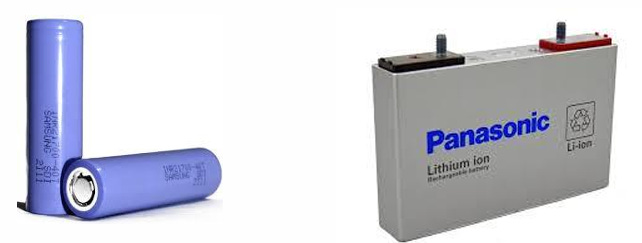
Why Battery Cell Format Matters
At first glance, choosing a battery cell format may look like a packaging decision. In reality, it’s a multi-dimensional engineering trade-off.
For any given project, the document highlights four core selection drivers :
Integration constraints
Weight
Volume
Packing efficiency
Thermal behavior
Heat generation
Heat dissipation pathways
Mechanical resistance
Structural robustness
Tolerance to vibration, shock, and swelling
Industrial production capacity
Manufacturing maturity
Cost per kWh
Supply-chain scalability
Every cell format optimizes these factors differently — which is why no single format dominates all applications.
Cylindrical Battery Cells
The Original Workhorse of Lithium-Ion
Cylindrical cells are the most mature and widely manufactured battery format in the world. If you’ve ever held an AA battery, you already understand the concept — lithium-ion cylindrical cells are simply a more advanced evolution.
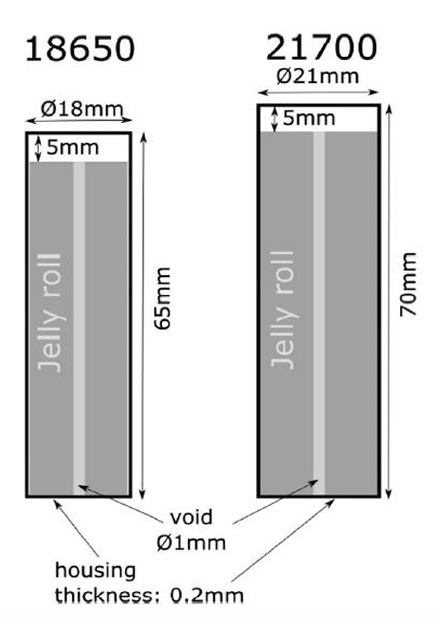
Common industry formats are named using their geometrical dimensions (diameter × height, in millimeters):
18650 → 18 mm × 65 mm
20700 → 20 mm × 70 mm
21700 → 21 mm × 70 mm
4680 → 46 mm × 80 mm
These cells dominate applications ranging from consumer electronics to electric vehicles and industrial tools.
Internal Structure: The Jelly-Roll Design
Inside a cylindrical cell, electrodes are stacked and wound into a spiral “jelly-roll” configuration as shown below 👇
