
🔋 Copper Busbar Rating — A Complete Guide for Electrical Engineers
Electrical systems rely on robust, efficient conductors to distribute power safely and predictably.

Electrical systems rely on robust, efficient conductors to distribute power safely and predictably. Busbars—solid strips or bars of highly conductive metal—are a central feature of switchboards, power distribution panels, industrial controls, and renewable energy systems. But how do engineers determine what size busbar to use for a given current demand? That’s where busbar rating comes in.
In this post, we’ll unpack what busbar rating means, how it’s calculated, the key influencing factors, and how to interpret a real-world busbar rating table. We’ll draw heavily on practical data from Austral Wright Metals’ technical resource as a concrete example.
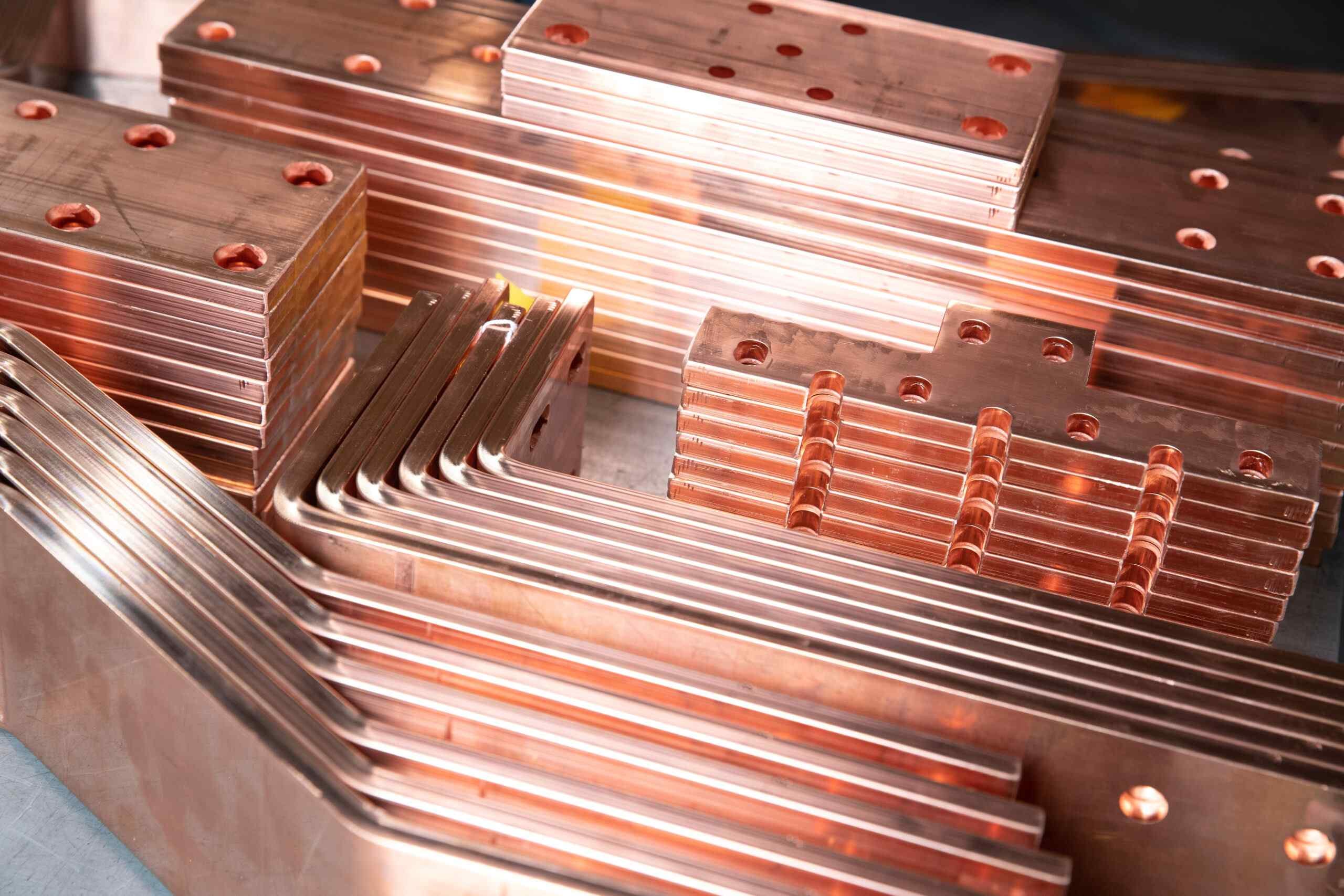
⚡ What Is a Busbar?
A busbar is a conductive element—typically copper or aluminum—used to carry and distribute electrical current inside an electrical assembly. Because of their low resistance and high current capacity, busbars replace multiple cable runs where compact, efficient distribution is required.
Copper is often the material of choice due to its:
High electrical conductivity (low resistance),
Excellent thermal performance,
Good mechanical properties for switchgear and panel fabrication.
Busbars are most commonly flat and rectangular in cross-section, but can also be round, square, or tubular depending on mechanical and space requirements.
📊 What Does “Busbar Rating” Mean?
Busbar rating refers to the maximum current a busbar can safely conduct without exceeding allowable temperature limits. Ratings are based on multiple variables including:
Cross-sectional size,
Material and purity,
Ambient conditions,
Installation configuration (edge-wise or flat),
Whether air is still or freely circulating.
Unlike cable ampacity tables governed by formal standards such as IEC/NEC, busbar rating tables are often compiled from laboratory measurements or manufacturer experience, then published as usable guides for designers.
🧮 Key Factors Affecting Busbar Ratings
Here are the most important elements that influence busbar current capacity:
📐 1. Cross-Sectional Area
The most fundamental determinant of current rating is the effective cross-sectional area of the busbar. Larger area means lower resistance and better ability to dissipate heat.
For example, a 25 × 1.60 mm copper bar has a sectional area of 40 mm², whereas a 40 × 2.00 mm bar has an area of 80 mm² — roughly double, and accordingly can carry significantly more current.
🌡️ 2. Temperature and Ambient Conditions
Busbar tables typically assume a nominal ambient temperature (often 40 °C) and a temperature rise limit (often 50 °C above ambient). These define the thermal budget—how hot the bar can get in operation. Ratings will change with different ambient temperatures or installation constraints.
Free air conditions (with some movement of air) will raise ratings slightly compared to still air conditions.
🔄 3. Orientation and Installation
Busbars can be installed flat or edge-wise, and this physical orientation affects moment of inertia and heat dissipation. Manufacturers often publish different ratings for these orientations.
Free air movement (e.g., industrial enclosures, ventilated panels) also improves cooling, increasing allowable current.
📈 4. AC vs DC
While some busbar tables list separate AC and DC ratings, most practical electrical layouts can use the same physical busbar for both alternating and direct current up to the same current—because thermal limits (heating due to I²R losses) dominate in both cases. The Austrial Wright Metals table lists both DC and AC figures for reference.
📑 How to Read a Typical Busbar Rating Table
Let’s use Austral Wright’s table to illustrate the format and meaning:
